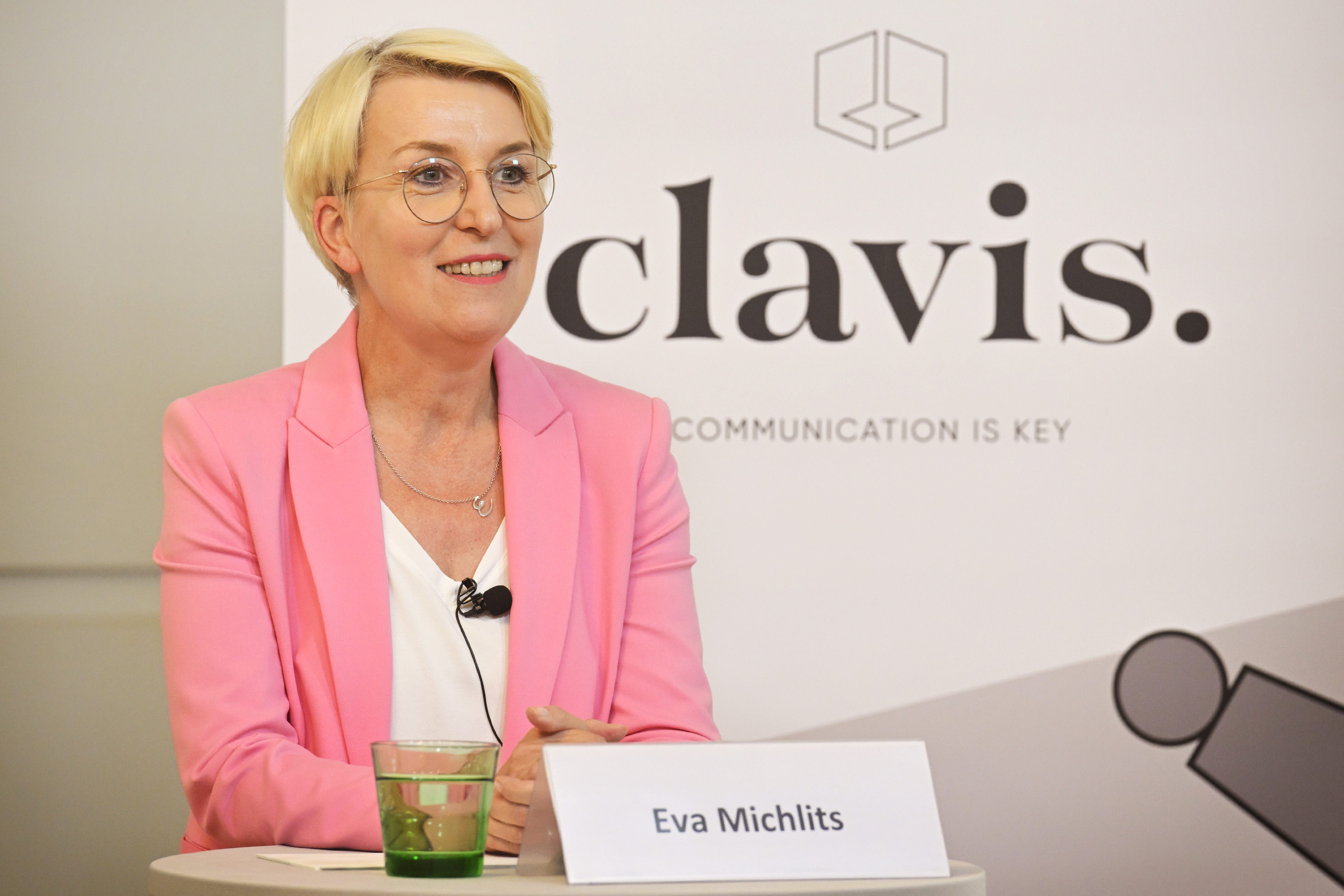
Communication with the public has become an important factor in the construction of energy plants. Eva Michlits, an expert in strategic communication at the consultancy firm clavis, gave an interview to power2market on this topical issue.
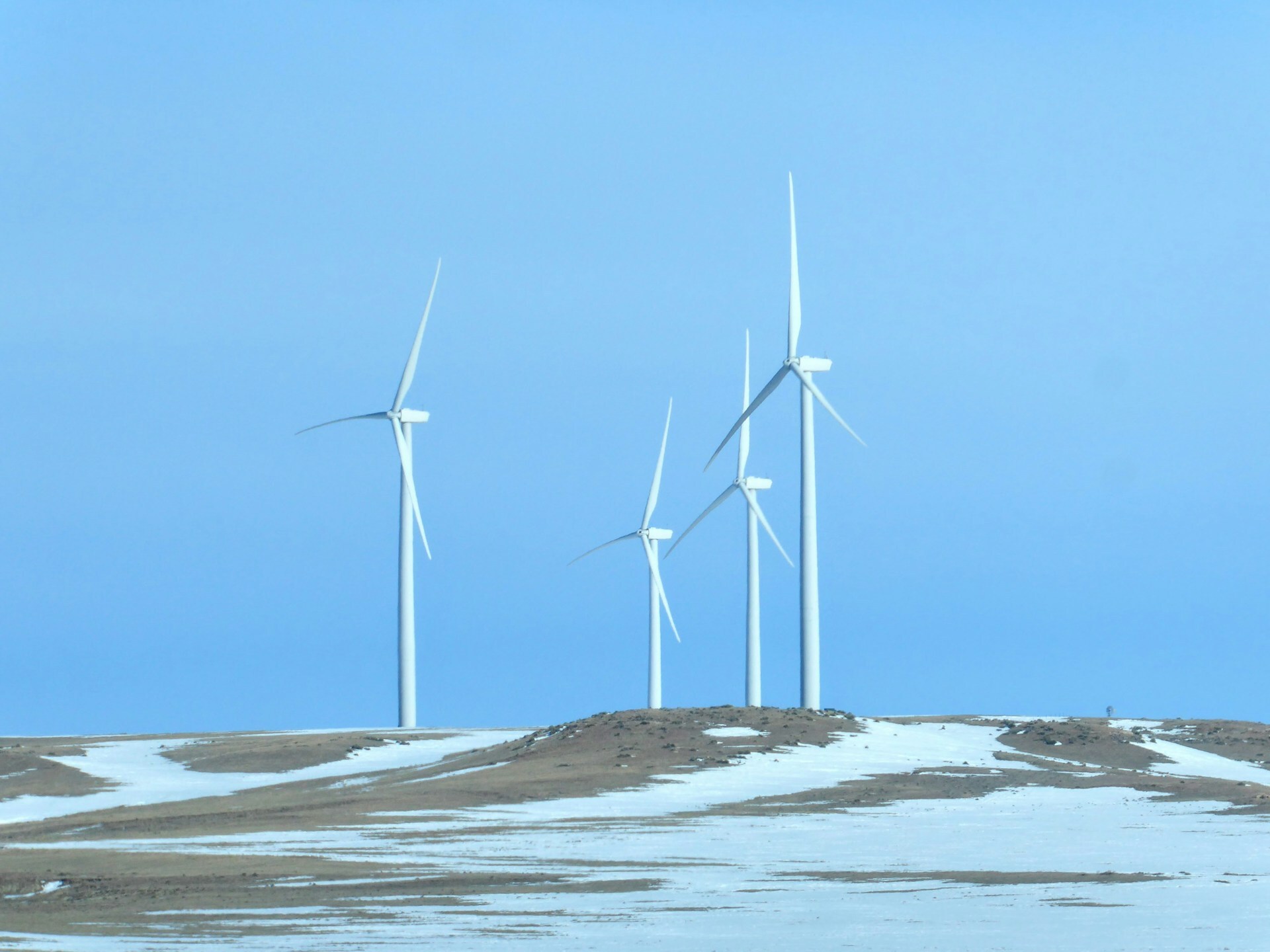
The times when large energy plants and infrastructure projects could be built almost without resistance are long gone. The positive connotation of environmentally friendly energy sources such as wind power and solar energy is also no longer undisputed. An increase in available information, coupled with a pronounced tendency towards NIMBY reflexes, has sensitised the population. In some cases, "tilting at windmills" has even become a political mission.
In this complex environment, in addition to technical and legal authorisation issues, communication and information to the public is increasingly a key factor for the success of a project when planning large-scale energy plants.
We spoke to Eva Michlits from the communications consultancy clavis, an expert in strategic communication who specialises in project communication and participation processes for the construction of large-scale energy plants.
power2market: Eva Michlits, thank you very much for finding the time for this interview. In your opinion, when should the communication of an energy project begin and are there risks involved in a late start?
Eva Michlits: Every topic has a career of attention. As communicators, we get in touch with stakeholders at an early stage. This gives us the opportunity to communicate the added value of a project. The discussion is then often less loud, emotional and confrontational. If we enter the dialogue too late and most people have already formed their opinion - often based on very different sources of information - there is little we can do to change this. Then we lose our room for manoeuvre in terms of public perception.
p2m : What kind of installations does your work usually involve?
EM: In the energy sector, mainly wind turbines and grid infrastructure projects. However, we also have experience with hydropower projects, large PV systems and bio-heat.
p2m : What are the most common fears, reservations and points of criticism regarding the construction of energy generation plants?
EM: For many people, change is generally not easy - especially when it visibly or tangibly interferes with their familiar surroundings. We therefore often encounter fears and reservations about energy projects, which are very human and understandable. Health concerns are a recurring theme, for example in connection with infrasound. Yet infrasound is a completely normal part of our everyday lives, for example from washing machines, cars or heat pumps. Another point concerns the landscape: wind turbines, power lines and power plants change the familiar view and vista and are therefore often the subject of emotional debate. However, it is interesting to see how quickly standards shift: as soon as a power line is planned close to your own home, proposals such as routing it through a Natura 2000 area or laying it in a river are put forward. Nature conservation is then often no longer an issue.
Our aim is to take all concerns seriously, provide transparent information and show why we need such plants for a secure and climate-friendly energy future.
p2m : Is this classic NIMBY behaviour or are there overriding concerns and motives?
EM: Of course, when it comes to energy projects, we always encounter classic NIMBY reactions, i.e. the attitude: "I'm actually in favour of wind power, but please not here, it's so beautiful here." I try to understand that. But I live in northern Burgenland myself - and it's beautiful there too, despite the many wind turbines. Or rather, precisely because of them, because they show that the energy transition can work.
At the same time, we know: There are often complex motives behind such objections. Many people express their concerns not out of fundamental rejection, but because they are worried about their quality of life, their health or the natural environment in their neighbourhood. On the other hand, we also see that arguments relating to nature conservation or ornithology are sometimes used strategically to delay or prevent projects.
It is important for us to address these issues openly. We want to listen, make the facts transparent and show that the energy transition and nature conservation are not opposites, on the contrary: a well-planned energy transition is also a contribution to protecting our environment. And the energy transition is a joint project. The widespread parochial thinking - i.e. focussing on one's own advantage without looking at the big picture - will not get us anywhere. If we lose our sense of responsibility for society as a whole, communication must appeal to solidarity and intergenerational justice.
p2m : Which stakeholders and players are involved in these processes?
EM: Many different players are involved in such processes. And they all bring their own perspective, agenda and responsibility. First of all, there are the operators who want to implement the project, as well as the federal, state and local authorities who issue authorisations and/or create framework conditions. Then there are the citizens and neighbours who are directly affected. Experts from a wide range of fields also play an important role - from technology and the environment to health and spatial planning - often with very different assessments and interests. Not forgetting the media, which make a significant contribution to how a project is perceived by the public. And finally us, ideally as early as possible in the process, with the aim of providing understandable information, involving stakeholders and classifying facts before half-knowledge or rumours become entrenched.
p2m : In your experience, which communication formats have proven particularly effective in reaching and involving people?
EM: In my experience, communication formats that enable genuine participation are particularly effective - in other words, where participation is not only promised but also visibly realised. Participation is not a fig leaf, it has to be taken seriously: When people realise that their voice counts, acceptance and commitment increase noticeably. Participation needs clear guidelines, but we can achieve a great deal within this scope, and it is precisely this freedom that needs to be made visible in various formats: whether through moderated dialogue events, workshops, citizens' councils or digital participation platforms.
Models of shared responsibility, such as financial participation, energy communities or foundations, can build strong bridges between the population, politicians and project applicants. The key here is to listen - even when it becomes uncomfortable - and to see critical voices as a valuable part of the dialogue. It is essential to meet people at eye level, with a language that everyone understands and with formats that do not exclude anyone.
p2m: Which narratives are suitable for creating acceptance for energy projects? Which ones would you rather avoid?
EM: We need to link the benefits of renewable energy more closely to our own lives. Energy means quality of life. Without electricity, without stable grids and without renewable energy - preferably from Austria - we cannot maintain our standard of living. We need to consistently emphasise this in our communication.
p2m : How can complex technical content be presented in such a way that it is understandable and credible for the general public?
EM: It's important for us to present the content in a visually appealing, condensed but not abbreviated and entertaining way. We see ourselves as translators - especially for technical content.
p2m : Has there been an example in your work where criticism or protest has decisively changed the communication strategy?
EM: Yes, absolutely. Criticism and protest are always signals that we take very seriously and that can significantly influence our communication strategy. We are very close to the projects and fine-tuning is part of our everyday work.
p2m : How can you recognise that the communication strategy of an energy project is successful?
EM: We are successful with our communication when the media coverage is predominantly neutral, approvals go smoothly, referendums are not necessary or are positive and citizens identify with the project. If many people from the community or the respective region come to the opening, it is clear that the project is accepted.
p2m : Has the public perception of planned large-scale energy projects changed over time, and if so, why?
EM: Yes, public perception has definitely changed. Today we are experiencing much greater polarisation due to various social factors. Many people are quicker to adopt clear pro or con positions, especially when it comes to large-scale energy projects. Unconditional trust in institutions and politics has declined significantly. This is fundamentally positive, as a critically informed public is important for a vibrant democracy. At the same time, however, this development also leads to positions hardening quickly and spaces for dialogue becoming smaller. Wind projects or grid infrastructure in particular are often met with immediate rejection. Unfortunately, this NIMBY thinking ignores the fact that the energy transition and security of supply will only work if we think in terms of solidarity, i.e. beyond our own location, personal sensitivities and habitual comfort. This is precisely where our task lies: we need to create formats and communication channels that get people talking.
p2m : Are there differences in the perception of different types of plant, e.g. wind turbines, PV plants, transmission lines, batteries, reservoirs/dams?
EM: Yes, there are differences, but one pattern is clear: as soon as people are directly affected, they react similarly. Whether wind turbines, power lines or battery storage systems - the proximity to your own home makes all the difference. Generally speaking, PV systems or storage systems are often viewed neutrally or even positively because they are less visible and easier to understand. Wind power or large grid infrastructure projects, on the other hand, trigger much stronger emotions. Ultimately, it is not the technology that is decisive, but how well it is communicated. If people understand why a project is necessary, acceptance increases significantly.
p2m : What three key tips would you give a project team that is just starting out with communication?
- Appeal to the head and heart. Make it clear why the project is important.
- Stay active and optimistic. Communication means creating. Attitude and confidence are contagious.
- Stay honest. Nothing is more convincing than transparency. Say what it is, even if it is uncomfortable.
p2m: Mrs Michlits, thank you very much for the interview.