Current LNG market situation
The European gas market continues to be influenced by LNG availability and the uncertainty surrounding the Strait of Hormuz. The relevant gas futures contract was trading at 33.99 EUR/MWh at 17:47 on 25 June, down 0.19 EUR/MWh or 0.56% from the previous closing price of 34.18 EUR/MWh. The trading range between 33.75 and 34.30 EUR/MWh indicates continued heightened sensitivity to geopolitical news. LNG remains crucial for Europe, as storage levels, at 47.2%, remain well below the previous year’s level and additional imports are required to meet winter targets.
Influencing factors
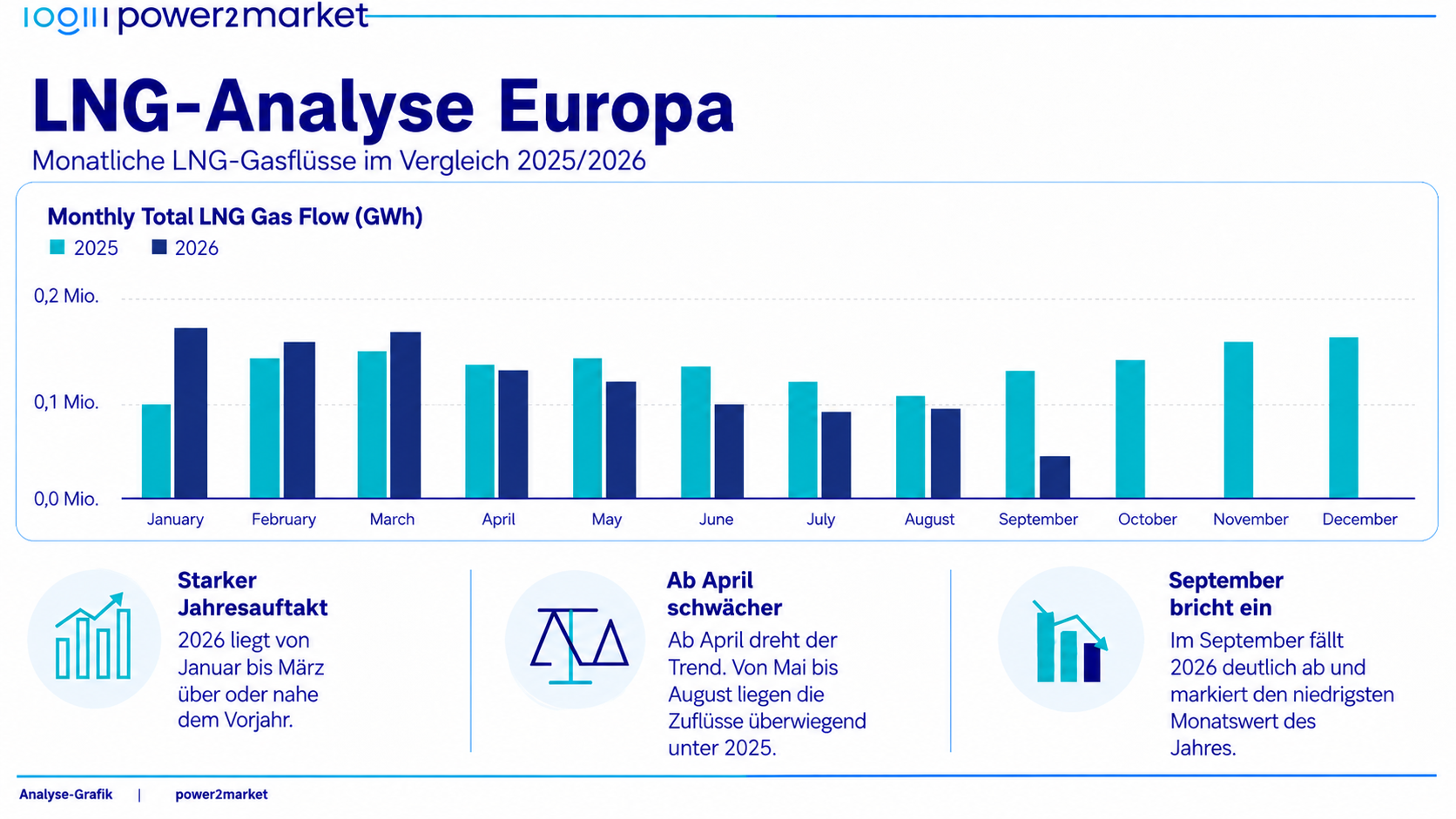
The situation in the Strait of Hormuz remains the most significant source of uncertainty. Although shipments are picking up again following the ceasefire, overall activity remains well below historical normal levels. LNG deliveries from Qatar are passing through the strait under heightened security measures, but volumes remain significantly below normal levels. At the same time, a cargo ship has once again been struck near Oman in the southern corridor of the Strait of Hormuz, following earlier warnings. This increases the risk to shipping, freight routes and supply reliability. Around 20% of global LNG supply depends on this route. For Europe, this intensifies competition for available volumes, particularly as fewer LNG shipments arrived between April and June, partly due to lower Qatari deliveries and a greater diversion of flexible volumes to Asia. In the first six months, the EU and the UK imported 58.8 million tonnes of LNG, just 1 per cent more than in the previous year. US supplies rose to 35.5 million tonnes, accounting for around 60 per cent of imports.
Short-term outlook
In the short term, the European LNG market remains tight. Whilst the 60-day ceasefire reduces immediate risks, it does not eliminate the uncertainty surrounding the Strait of Hormuz, sanctions and geopolitical escalation. At the same time, the current forward price structure offers only limited incentives for filling storage facilities, as TTF contracts for the third and fourth quarters were recently on a par at 40.56 EUR/MWh. Europe must therefore either accept higher prices to secure additional LNG volumes or hope for a later improvement in the supply situation. As long as shipping through the Strait of Hormuz is not considered to have returned to normal and Asian demand is tying up flexible cargoes, LNG will remain a supporting factor for European gas prices.